Choosing a business or product name can feel simple at first. An entrepreneur thinks of something memorable, checks whether the domain is available, creates a logo, and starts building the brand. In practice, however, naming deserves more careful attention.
A name can eventually appear on websites, packaging, advertising, product labels, social media profiles, sales materials, and legal documents. If a business discovers too late that the name is too similar to an existing trademark, changing it can become expensive and disruptive.
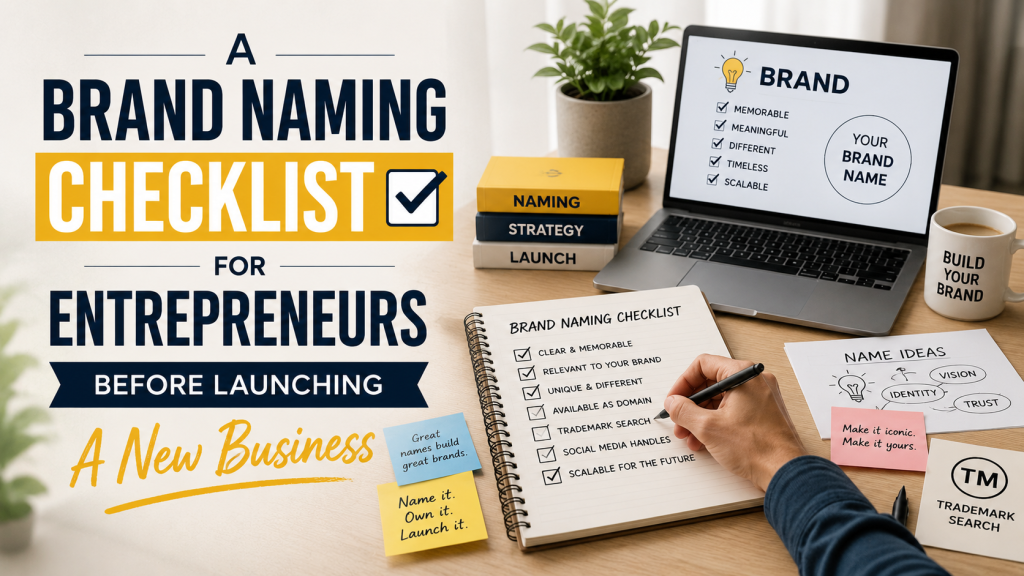
A US trademark search should therefore be part of a wider naming checklist. Rather than making a decision based only on creativity or domain availability, entrepreneurs can evaluate a potential name from several practical perspectives before committing to it.
Start by Defining What the Brand Should Communicate
Before brainstorming names, it helps to understand what the business wants customers to feel or understand when they encounter the brand.
A good name does not necessarily explain every feature of a product. However, it should fit the intended identity of the company.
Entrepreneurs can begin by defining:
- The target customer
- The main product or service
- The personality of the brand
- The problem the business solves
- The desired price positioning
- Possible future product categories
A company targeting professional buyers may want a different naming style from a consumer brand aimed at younger customers.
Defining these characteristics before brainstorming can make it easier to eliminate names that sound interesting but do not support the long-term direction of the business.
Create More Names Than You Think You Need
One of the easiest mistakes to make is becoming attached to the first strong idea.
Instead of developing only one or two names, create a much larger list.
Twenty or thirty possibilities may initially seem excessive, but many will naturally disappear once they are evaluated for pronunciation, memorability, domain availability, market similarity, and trademark concerns.
A larger list gives the business flexibility.
If trademark research reveals potential problems with one favorite option, another suitable name may already be available for consideration.
This is much easier than returning to a blank page after a branding project has already begun.
Check Whether the Name Is Easy to Pronounce
A name may look attractive on a screen but become awkward when customers try to say it.
Pronunciation matters because people often encounter brands through conversation, video, sales representatives, podcasts, recommendations, and social media.
Try saying each proposed name several times.
Ask people unfamiliar with the project to read the name aloud. If different people pronounce it in completely different ways, that may create unnecessary friction.
A simple pronunciation test can help answer questions such as:
- Is the name easy to say?
- Is the pronunciation obvious?
- Could customers confuse it with another word?
- Does it sound professional when spoken?
- Could it be easily remembered after hearing it once?
This exercise can also identify phonetic variations worth including in a trademark lookup.
Consider How Customers Might Spell the Name
Creative spelling is common in modern branding. Companies may remove vowels, replace letters, or combine multiple words to create something distinctive.
That approach can work, but it can also create search and trademark challenges.
Suppose a customer hears the brand name in conversation. Would that person know how to type it into a search engine?
If several spellings seem equally likely, entrepreneurs should search those alternatives during a trademark check.
A proposed name might need to be researched in forms such as:
- Standard spelling
- Phonetic spelling
- Common misspellings
- Joined words
- Separated words
- Singular versions
- Plural versions
Thinking about customer behavior can make trademark research more thorough.
Review Competitors Before Settling on a Name
Businesses should understand how competitors are naming themselves.
The purpose is not to imitate other companies. In fact, the goal should usually be the opposite.
A market filled with similar-sounding brand names can make differentiation difficult. Choosing another name that follows the same pattern may make it harder for customers to remember which company offers which product.
Review competing businesses and look for repeated naming styles.
Are most competitors using technical terms? Are they combining two descriptive words? Are they using initials or invented words?
A distinctive direction may help the new brand stand out.
Competitor research can also reveal names that should be included in a broader trade mark search.
Perform a Trademark Check Before Designing the Final Logo
Once a logo has been professionally designed, a name starts to feel permanent.
Founders may become emotionally attached to the visual identity and become less willing to change the underlying name.
For this reason, trademark research should ideally take place before significant design investment.
Entrepreneurs can use a free US trademark search tool to screen potential brand names before finalizing logos, packaging, and other visual assets. LANPDT provides this resource as part of the support it offers to inventors and product creators during early-stage development.
An initial search can help identify federal trademark records that may deserve closer examination.
It should be treated as research rather than as a guarantee that a name is legally available.
Search Beyond Exact Matches
Entering the exact proposed name into a trademark checker is a sensible starting point, but stopping there can leave important gaps.
Similar names may also be relevant.
Imagine a business wants to launch a product called “Solvexa.” No exact result appears, but existing marks such as “Solvexia” or “Solveksa” might deserve attention depending on the products involved.
Trademark research should therefore consider:
- Similar spelling
- Similar pronunciation
- Similar meaning
- Abbreviations
- Common variations
- Different word order
- Singular and plural forms
The objective is to understand the wider naming environment surrounding the proposed brand.
A broader trademark lookup may reveal potential concerns that an exact search misses.
Examine the Goods and Services in Search Results
Finding a similar trademark does not automatically determine whether a name can or cannot be used.
The products and services associated with the existing mark are important.
A similar name connected with closely related goods may deserve more attention than one associated with a completely different field.
When reviewing a USPTO lookup, entrepreneurs should read the descriptions attached to relevant records.
Consider whether the businesses:
- Sell similar products
- Serve similar customers
- Use similar sales channels
- Operate in related industries
- Could reasonably be perceived as connected
This context helps make trademark search results more meaningful.
Trademark classes can assist with organization, but the actual descriptions of goods and services should also be reviewed.
Check the Trademark Record Status
Search results may include active registrations, pending applications, abandoned applications, or cancelled registrations.
Active records generally deserve careful attention, but inactive records should not always be dismissed immediately.
An abandoned trademark application may identify a company that previously attempted to register a similar name. A cancelled registration may relate to a business that has continued using the name commercially.
Trademark rights can involve factors beyond the current status of one federal record.
Therefore, an inactive result can still provide useful information and may justify additional research.
Check Domains, But Do Not Rely on Them
Domain availability is an important part of modern brand development.
A matching website address can make a name easier to market and remember. However, domain registration and trademark rights are separate matters.
The fact that a .com address is available does not prove that the corresponding name has no trademark issues.
Similarly, the fact that someone already owns the most obvious domain does not automatically mean the proposed trademark cannot be used.
Domain availability should therefore be considered alongside trademark research, not instead of it.
Businesses may also want to evaluate:
- Alternative domain extensions
- Social media usernames
- Common misspellings of the domain
- Search engine results for the proposed name
Together, these checks can provide a broader view of how crowded the name may be online.
Think About Packaging Before Approving the Name
For physical-product businesses, brand names can become embedded in manufacturing.
A name may eventually be printed on packaging, engraved into a product, molded into plastic, sewn into fabric, or included on electronic interfaces.
Once that happens, changing the name becomes more complicated.
Before approving large packaging quantities or permanent product branding, entrepreneurs should make sure they have completed appropriate trademark research.
Changing a name in a digital design file is inexpensive. Changing it after thousands of products have been manufactured is another matter entirely.
This makes brand validation an important part of production planning.
Consider Where the Business May Grow
A good brand name should not only fit the first product.
Many businesses begin with one item and later expand into accessories, related products, services, software, or new markets.
Before finalizing a name, ask where the company may realistically be in three to five years.
A name that is extremely specific to one product feature may feel limiting later.
Trademark research can also take future growth into account. If expansion into related categories is already part of the plan, businesses may want to investigate the trademark landscape surrounding those areas as well.
This can help determine whether the proposed name is flexible enough for the wider brand the company hopes to build.
Understand the Limits of a Trademark Search Tool
Search tools can make early research faster and more accessible, but they cannot make every legal determination.
Trademark issues may involve similarity, marketplace use, common-law rights, relationships between products and services, and the likelihood of consumer confusion.
An automated trademark checker cannot always evaluate these factors fully.
For a business preparing to make a significant investment in a brand, consulting a qualified trademark attorney may be appropriate.
Professional clearance can provide a deeper review and help businesses understand the risks associated with a proposed name.
Preliminary research remains valuable because it can narrow the options and identify obvious issues before additional resources are committed.
Use a Simple Scoring System for the Final Shortlist
Once several potential names have passed the early screening process, entrepreneurs can compare them systematically.
A simple scorecard might rate each name from one to five for:
- Memorability
- Pronunciation
- Distinctiveness
- Brand relevance
- Domain options
- Trademark search findings
- Future flexibility
- Visual branding potential
This makes the decision less dependent on personal preference.
One founder may love a particular name, while the scorecard reveals that another option performs better across several practical factors.
Structured comparison can be particularly useful when several partners or team members are involved in the decision.
Choose a Name You Can Build Around With Confidence
A successful brand name is rarely the result of creativity alone.
It should be memorable, suitable for the audience, easy to communicate, flexible enough for future growth, and researched before the business invests heavily in it.
Trademark research is an important part of that process.
Entrepreneurs can begin with a large naming list, narrow it using practical criteria, conduct a US trademark search, investigate reasonable variations, review relevant goods and services, and obtain professional advice when appropriate.
The earlier these steps happen, the easier it is to replace a weak or potentially problematic name.
By treating naming as a structured business decision rather than a last-minute creative exercise, entrepreneurs can build their visual identity, packaging, marketing, and product launch around a name that has undergone much more thoughtful evaluation.