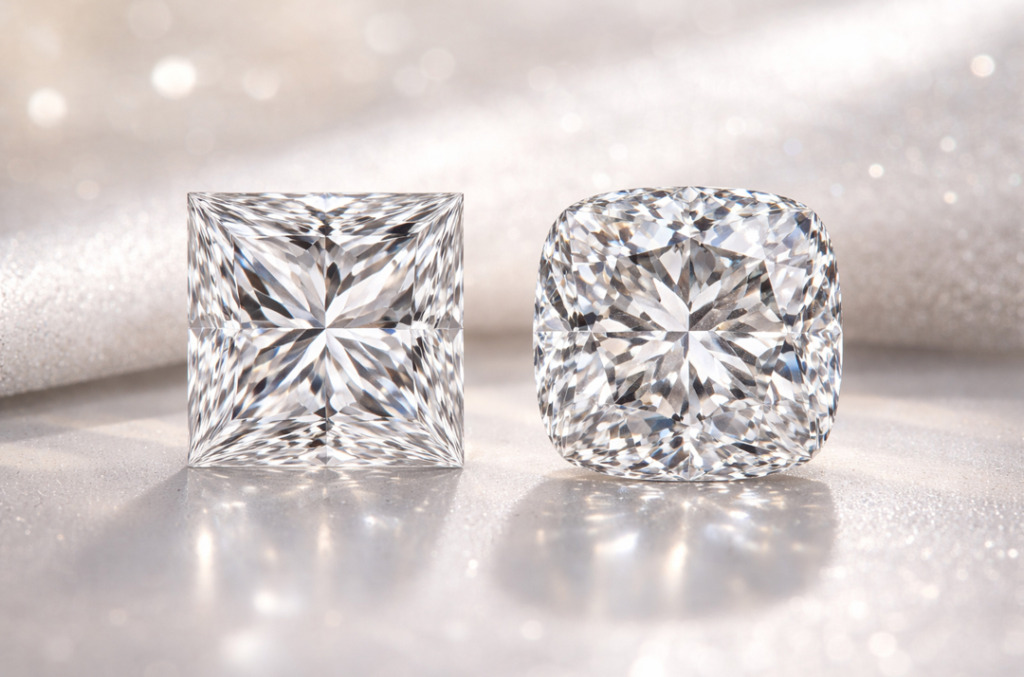
The princess cut diamond has become one of the most recognizable shapes in contemporary engagement rings. Its sharp lines, square silhouette, and brilliant faceting create a balance between modern design and timeless appeal. For many buyers, it offers an alternative to the traditional round diamond while maintaining a similar level of sparkle and visual impact.
Despite its popularity, selecting a high-quality princess cut diamond requires a deeper understanding of how its structure affects performance and durability. Unlike round diamonds, which follow well-established grading standards, princess cuts demand closer attention to proportions, symmetry, and setting. Approaching the process with knowledge allows buyers to make decisions that feel both confident and meaningful.
The Structure Behind the Princess Cut
The princess cut is defined by its square or slightly rectangular shape, along with pointed corners and a brilliant-style facet arrangement. These facets are designed to maximize light return, creating a lively interplay of brightness and fire. This gives the diamond a crisp, energetic appearance that works well in a variety of settings.
Its geometric structure also contributes to its modern aesthetic. Clean lines and symmetry make it particularly appealing for those who prefer a more contemporary look, while its brilliance ensures it remains visually engaging.
A Distinctive Square Brilliant
Unlike step-cut diamonds, which emphasize clarity and transparency, the princess cut focuses on sparkle. This distinction makes it one of the few square-shaped diamonds that can rival the brilliance of a round cut.
Understanding Cut Quality Without Standardization
One of the complexities of the princess cut lies in the absence of a universal cut grading system. Buyers must rely on proportion measurements such as table size, depth percentage, and symmetry to evaluate quality. These factors influence how light travels through the diamond and how it appears in different environments.
A well-proportioned princess cut will display even brightness across its surface, with no noticeable dark areas or light leakage. Poor proportions can result in a diamond that appears dull, even if it has strong clarity and color grades.
The Importance of Balance
Achieving the right balance between depth and table size ensures that the diamond maintains both brilliance and visual presence. This balance is often best assessed through a combination of certification data and visual inspection.
Clarity and Color Considerations
The faceting of a princess cut diamond can help conceal certain inclusions, making it possible to choose slightly lower clarity grades without affecting visible appearance. However, inclusions near the corners should be carefully evaluated, as these areas are more exposed.
Color is another factor that deserves attention. Princess cut diamonds tend to retain color slightly more than round diamonds, meaning that selecting a near-colorless grade can help maintain a bright, clean look. These subtle choices can significantly influence the overall impression of the stone.
For a more comprehensive breakdown of these factors, resources such as Princess cut ring buying guide provide additional insight into evaluating quality and performance.
Durability and Setting Choices
The pointed corners of a princess cut diamond are one of its defining features, but they also require protection. Settings that incorporate prongs or bezels at the corners help reduce the risk of chipping. This makes the choice of setting particularly important for engagement rings intended for daily wear.
Design also influences how the diamond interacts with light. Open settings allow more light to enter the stone, enhancing brilliance, while more protective designs may slightly limit light exposure but improve durability. Finding the right balance ensures both beauty and practicality.
Matching Design to Lifestyle
Buyers should consider how the ring will be worn. Active lifestyles may benefit from more secure settings, while those prioritizing aesthetics may opt for designs that maximize light performance.
Comparing Princess Cut to Other Shapes
When compared to round diamonds, princess cuts often offer a more cost-efficient option while delivering comparable brilliance. Their cutting process typically preserves more of the original rough diamond, which can result in a lower price per carat.
In contrast to elongated shapes such as oval or marquise, the princess cut provides a symmetrical and compact appearance. This versatility allows it to work well in both minimalist and elaborate designs, making it a flexible choice for different styles.
Authenticity and Confidence in Selection
Ensuring that a diamond is genuine is an essential part of the buying process. Certification from reputable gemological laboratories provides verification of authenticity and detailed information about the diamond’s characteristics. This documentation serves as a foundation for trust and transparency.
Additional guidance on identifying genuine diamonds can be found in methods for recognizing real diamonds, which outlines practical considerations for buyers.
Integrating Diamonds into Broader Jewelry Styles
While engagement rings often take center stage, diamonds are part of a larger jewelry context. Coordinating pieces such as necklaces, bracelets, or earrings can enhance overall style and create a cohesive look. Understanding how different designs interact adds depth to the selection process.
This broader perspective is reflected in traditional and modern jewelry influences, where design, culture, and craftsmanship come together.
A Thoughtful Approach to Princess Cut Selection
Choosing a princess cut diamond involves more than selecting a shape. It requires an understanding of how proportions, light performance, and design interact to create the final appearance. Each element contributes to the diamond’s character, influencing both its beauty and durability.
Taking the time to evaluate these factors carefully ensures that the final choice aligns with both personal preferences and practical needs. This approach transforms the buying process into a more considered and rewarding experience.
Finding Lasting Value in Design and Craftsmanship
The princess cut remains a compelling choice because it balances modern aesthetics with enduring brilliance. Its versatility allows it to adapt to a wide range of styles, making it suitable for both contemporary and classic designs.
By approaching the selection process with attention to detail, buyers can choose a diamond that feels both refined and meaningful. The result is a piece of jewelry that continues to resonate, reflecting both craftsmanship and the intention behind its selection.