The shift towards sustainable energy is now not a futuristic idea but a present-day economic necessity. As application quotes vary and the cost of photovoltaic generation continues to drop, house owners and industrial builders are looking for approaches to make smarter, records-subsidized investments. A streamlined costing workflow is the difference between a mission that offers a speedy go back on funding and one that will become a logistical burden. By integrating unique website online statistics with computerized monetary modeling, stakeholders can address the anomaly that frequently surrounds large-scale electricity transitions.
1. The Role of Precision in Modern Energy Planning
The foundation of any successful renewable electricity venture lies in the accuracy of its preliminary economic evaluation. In the past, “tough estimates” have been popular among enterprises, often leading to sudden exchange orders during construction. Today, smart workflows utilize excessive-decision satellite tv for pc imagery and localized weather statistics to create a comprehensive digital duplicate of the venture website. This permits a granular look at power production potential before a unmarried piece of equipment is purchased.
When evaluating Solar Installation Services in Maryland, for example, these workflows do not forget precise coastal irradiance stages and nearby building codes. By front-loading these facts, companies can make sure that the undertaking remains within budget and meets all regulatory necessities without the need for steeply-priced mid-undertaking corrections.
2. Digitizing the Site Assessment Process
Traditional guide surveying is being changed by rapid digital capture. Using drones ready with LIDAR era, engineers can map out roof obstructions, vent pipes, and shading from nearby foliage in a matter of minutes. These facts are then fed into design software that robotically generates the maximum green layout for the panels. The result is an especially correct invoice of materials that minimizes waste and optimizes the use of available space.
This degree of precision is in particular vital for those overseeing Solar Installation Services in Chesapeake, wherein complicated rooflines and varying sun exposure throughout the seasons can substantially impact the long-term yield of the gadget.
3. Financial Modeling and Logistics Integration
Once the physical design is solidified, the clever workflow shifts its focus to the supply chain and monetary forecasting. By linking the design software program at once to real-time inventory databases, agencies can lock in pricing for modules, inverters, and racking structures. This prevents the “charge creep” that frequently happens between the preliminary quote and the actual start date of the installation.
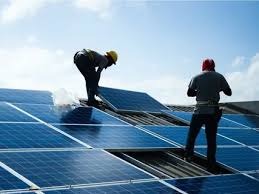
For tasks related to Solar Installation Services in Alexandria, in which city logistics can upload layers of complexity to transport schedules, having a pre-demonstrated delivery chain ensures that components arrive precisely when they’re needed. This just-in-time approach reduces the need for an on-site garage and minimizes the risk of harm or robbery.
4. Accelerating the Project Timeline
Time is a crucial variable in the cost-benefit evaluation of renewable energy. Every month, if an assignment is not on time within the allotted time or the design section, the patron is still paying the full rate for grid power. Smart workflows automate the era of allow-ready plan sets and interconnection applications. This “vehicle-compliance” function extensively reduces the back-and-forth between the contractor and neighborhood software carriers.
Reliable Solar Installation Services in Alexandria leverage those automatic systems to transport projects through the approval pipeline faster than ever before, allowing homeowners to begin generating their own clean energy and recouping their funding in record time.
5. Quantitative Analysis of System Performance
To really recognize the price of a clever costing workflow, one has to examine the records. Below is an assessment of traditional versus clever workflow metrics for a popular $10 text kW$ residential venture.
ROI and Production Calculations
The true indicator of a smart investment is its long-term financial return. Below is a clear calculation of the expected annual savings for an asset owner using a high-performance solar system.
System Parameters
- System Capacity (P): 10 kW
- Solar Irradiance (H): 4.2 Peak Sun Hours/day
- System Efficiency (L): 86% (14% system loss)
- Utility Rate (R): $0.14 per kWh
Daily Energy Production (E)
E=P×H×LE = P \times H \times LE=P×H×L E=10×4.2×0.86=36.12 kWh/dayE = 10 \times 4.2 \times 0.86 = 36.12 \text{ kWh/day}E=10×4.2×0.86=36.12 kWh/day
Annual Energy Production
36.12×365=13,183.8 kWh/year36.12 \times 365 = 13,183.8 \text{ kWh/year}36.12×365=13,183.8 kWh/year
Annual Financial Savings (S)
S=13,183.8×0.14=1,845.73S = 13,183.8 \times 0.14 = 1,845.73S=13,183.8×0.14=1,845.73
- Annual Savings: $1,845.73 per year
Long-Term Savings (25 Years)
Assuming a conservative 3% annual utility inflation rate, the total savings over 25 years can exceed:
- Estimated Total Savings: $65,000+
Summary Table
| Metric | Value |
| Daily Energy Production | 36.12 kWh/day |
| Annual Energy Production | 13,183.8 kWh/year |
| Annual Savings | $1,845.73 |
| 25-Year Savings | $65,000+ |
A professional Residential Solar Panel Installer Maryland makes use of those particular figures to assist customers see past the preliminary sticker charge and attention to the lifetime price of the asset.

6. Enhancing Stakeholder Transparency
Trust is built through transparency. When a contractor can gift a consumer with a 3D visualization of their home, a detailed breakdown of every component, and a 12-month-by-year cash flow analysis, the decision-making system becomes easy. The records get rid of the “income” element and replace it with an “engineering” reality.
Choosing a good Solar Installation Company in Alexandria ensures that the records utilized in these models are based on real historical performance within the place, in preference to regular countrywide averages. These localized records are the important thing to preventing the “over-promise and below-deliver” entice that has every so often plagued the industry.
7. Streamlining Maintenance and Monitoring
The costing workflow no longer gives up while the panels are set up. Smart structures combine with a 24/7 monitoring software program that signals both the owner and the company if a specific string of panels is underperforming. By budgeting for “active upkeep” in preference to “reactive restoration,” the lifetime operational costs are extensively lowered.
8. Final Thoughts
Integrating a smart costing workflow into the strength transition manner is the handiest manner to ensure scalability and financial viability. By lowering the “gentle fees” related to human mistakes, guide surveying, and administrative delays, we will make renewable electricity the default desire for each property. Precision inside the early ranges leads to confidence inside the final effects, turning a complex technical setup right into an easy, worthwhile investment for the future.
Frequently Asked Questions
What are “tender expenses” in a sun challenge?
Soft expenses consist of everything that is not the physical hardware. This covers allowing, layout, exertions, and administrative tasks. Smart workflows especially focus on these regions to lessen the total machine charge.
How do weather records affect the cost estimate?
By the usage of 30-yr historic climate styles, smart workflows can estimate how a great deal power a system will produce throughout cloudy or rainy months. This guarantees the purchaser has a practical expectation in their month-to-month application invoice offsets.
Can I use these workflows for commercial properties?
Yes. In reality, commercial projects advantage even more from smart costing because the size of the funding makes even a $1%$ mistakes in production forecasting really worth thousands of greenbacks over the life of the machine.
How frequently is a machine monitored after installation?
Smart workflows typically consist of cloud-based monitoring that tests the device each 15 minutes. This allows for real-time troubleshooting before a small technical glitch becomes a widespread lack of electricity production.