In the high-stakes surroundings of 2026, the construction and engineering sectors are present process a large shift towards data-driven performance. The generation of “secure padding” and manual calculations is being changed by means of lean methodologies that prioritize pace without sacrificing a unmarried percentage of accuracy. A Lean Estimation System isn’t always merely a set of software programs; it’s miles a holistic approach to pre-production that removes administrative waste and focuses human know-how where it matters most. By refining the workflow from the preliminary consumption to the very last bid submission, corporations can secure more contracts while ensuring every mission is constructed on a foundation of financial reality.
The Competitive Edge: Why Leading Electrical Estimating Companies Adopt Lean
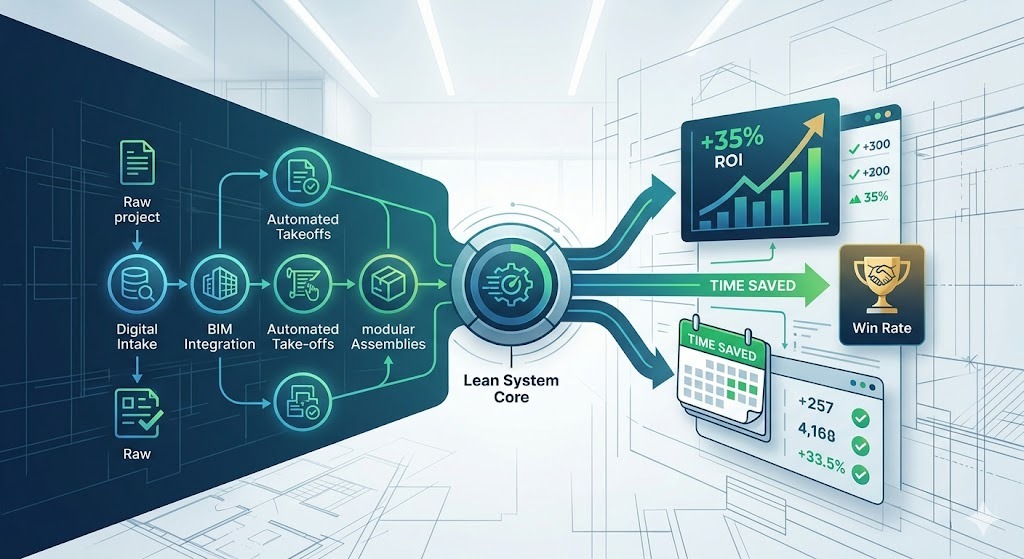
The most successful firms in today’s market recognize that the point is the closing of foreign money. When the pre-creation section is slowed down through disorganized statistics and fragmented conversation, the danger of “missing the window” on a top gentle will increase. To combat this, elite corporations are transitioning towards standardized virtual intake techniques. This ensures that each Electrical Estimating begins their work with a comprehensive, verified set of venture parameters, eliminating the “prevent-and-begin” nature of conventional bidding.
By disposing of the “noise” of unverified statistics, teams can raise awareness of the nuances of the layout. A lean approach allows for a deeper analysis of website-specific dangers and fabric volatility, which can often be the hidden killers of task margins. When the estimation procedure is lean, it turns into a strategic device in place of only a clerical necessity, allowing the organization to offer customers with bids that are both competitive and fantastically defenseless against future audits.
Data Synchronization in Modern Electrical Estimating Services
Integration is the pulse of a lean device. In an enterprise where cloth charges can fluctuate overnight, relying on static spreadsheets is a recipe for disaster. The maximum superior structures now make use of real-time price feeds that sync without delay with the invoice of substances. This creates a “stay” estimate that reflects the present-day marketplace truth at the exact moment of submission. This level of synchronization reduces the need for massive “contingency buffers” that often make a bid uncompetitive.
Furthermore, the transition to Building Information Modeling (BIM) permits automatic take-offs, which are much more accurate than manual clicks on a 2D screen. By leveraging 3-D spatial statistics, the system can account for complicated routing and installation hurdles that might be easy to miss in a traditional workflow. This digital backbone Electrical Estimating service guarantees that the technical output is consistent throughout the entire department, no matter which individual is leading the undertaking.
Scaling Through Modular Assemblies in Construction Estimating
To gain authentic scalability, a firm needs to move far from building every bid from the ground up. The implementation of modular “smart assemblies” is the secret to high-extent, high-accuracy output. These assemblies are pre-configured programs of labor, cloth, and equipment for common project components. Instead of counting every character, nut, bolt, and foot of conduit, an estimator can deploy a confirmed meeting that has been stress-examined inside the field.
These modules aren’t static; they are refined through a continuous comments loop. After an assignment is finished, the actual expenses are compared in opposition to the initial estimate, and the assembly is up to date to reflect real-world performance. This turns each assignment right into a studying opportunity, ensuring the machine will become smarter and more accurate with every bid submitted. This modularity permits an organization to address a 50% growth in bidding quantity without needing to lease extra personnel, without delay boosting the bottom line.
Streamlining the Review and Approval Cycle
One of the most common “bottlenecks” within the bidding technique is the final assessment. In many corporations, that is where tasks take a seat for days, looking forward to a senior manager to double-take a look at the mathematics. A lean system utilizes automatic “exception reporting” to highlight anomalies or excessive-threat objects that require human attention. Instead of reviewing 2,000 lines of information, the manager focuses only on the five% that fall outside of normal parameters.
This focused evaluation manner slashes the “lifeless time” between finishing a bid and sending it to the patron. It also guarantees that senior information is carried out, which it provides the maximum cost—identifying strategic possibilities and chance mitigation—instead of checking mathematics. Standardized reporting formats also ensure that the purchaser gets a professional, easy-to-digest thought that evokes self-assurance within the firm’s technical skills.
Leveraging Analytics for Market Positioning
Beyond the instant numbers, a lean machine presents a wealth of historical records that can be used for strategic market positioning. By reading “win-loss” ratios across exceptional challenge kinds and locations, companies can identify in which they’re most competitive. This permits management to be selective, focusing their bidding efforts on the tasks where they have the highest probability of fulfillment and the healthiest margins.
This records-pushed method eliminates the “gut feeling” from enterprise development. When you know precisely where your efficiencies lie, you can bid with a level of self-belief that your competition definitely can not match. Predictive analytics can also forecast labor availability, assisting the organization in the course of peak seasons, which is a primary purpose of mission failure and reputational harm.
Creating a Culture of Continuous Improvement
The final thing of any lean machine is the individuals who operate it. A “Lean Culture” encourages each crew member to discover and phone out waste. Whether it’s a redundant meeting, a perplexing software interface, or a previous fabric list, the goal is “Kaizen”—continuous, incremental development. When the crew is empowered to refine their own processes, the machine turns into a residing, breathing asset in preference to an inflexible set of guidelines.
Training and improvement are key to this transition. As the Construction Estimating Services is computerized, the role of the estimator evolves into that of a “Project Strategist.” This higher-stage work is more enticing, results in better process pleasure, and ultimately leads to a better pre-creation branch, which could adapt to any marketplace shift.
Final Thoughts
Building a Lean Estimation System is an investment in the long-term resilience of a creation or engineering firm. By focusing on the elimination of waste, the mixing of real-time records, and the empowerment of human expertise, organizations can remodel their bidding manner into a powerful, aggressive benefit. In a world in which precision is the distinction between earnings and loss, being “lean” is no longer optional—it’s the prerequisite for leadership in the constructed surroundings.
Frequently Asked Questions
Does a lean system require changing all of our cutting-edge software?
Not always. Many lean concepts can be applied by means of optimizing how you operate your current gear. The awareness is on the workflow and statistics integration. However, as you scale, you could find that specialised cloud-based systems provide the “real-time” advantages that legacy software can’t offer.
How do we make certain accuracy while the use of “modular assemblies” for specific tasks?
No mission is one hundred percent precise. Most initiatives are 80% preferred and 20% custom. The lean gadget automates the 80%, giving your professional estimators more time to concentrate their important thinking on the 20% that requires specialised attention.
Will moving to a lean device gradually slow us down during the transition?
There is a minor learning curve, but most firms find that the “transform” they keep away from within the first month makes up for the time spent on education. Once the system is stable, the speed of output normally increases by means of 30% to 50%.
Is this gadget suitable for small residential contractors?
Yes. In fact, small contractors often have the most to gain because they have much less “margin for mistakes.” A lean device ensures that a small enterprise owner isn’t spending their nights and weekends doing manual take-offs, allowing them to focus on growing the organisation.